


Understanding Crystal Grading: How to Read Quality Tiers Before You Buy in Bulk
Crystal grading can get confusing when one supplier calls a product A-grade and another labels something similar AAA. Which one is actually better? And is the more expensive option worth stocking? For retailers buying in bulk, these labels can affect the buying cost, selling price and the kind of customers a product attracts.
The catch is that there is no single grading system used by every crystal supplier. A higher grade might mean fewer visible flaws, better colour consistency or a neater finish. It all comes down to how the supplier defines it.
What Does Crystal Grading Actually Mean?

Think of crystal grading as a way to sort products by certain quality features. These could include clarity, colour, surface marks, shape, finish and visible inclusions. The features that matter most depend on the type of crystal being sold.
A natural crystal, for example, may have inclusions or colour variations that are part of its appearance. That does not automatically make it poor quality. A polished decorative crystal, on the other hand, might be expected to have a smoother surface and a more consistent finish.
So, don’t judge a product by its grade label alone. Ask what the supplier checks before assigning that grade. Otherwise, you could pay extra for AAA stock without knowing what makes it different from A-grade stock.
How to Read a Crystal Grading Scale
A crystal grading scale often uses labels such as A, AA and AAA. In many supplier systems, the higher letters suggest a higher quality tier. But there is a catch: the labels are not universal.
One supplier might use AAA for crystals with fewer visible imperfections. Another might consider colour, polish and consistency together. Some suppliers may even use different criteria for different products.
Here is a rough guide to how these labels might be used.
| Grade | What you might get | What to check before buying |
|---|---|---|
| A | A standard commercial grade. Some visible variations may be present. | Are the marks, colour differences or inclusions acceptable for your customers? |
| AA | A more consistent look, possibly with fewer noticeable flaws. | Can you actually see the difference compared with A-grade samples? |
| AAA | A premium tier according to the supplier’s own grading rules. | What makes it premium, and is that difference worth the extra cost? |
| Other labels | A different grading system, or a category created by the supplier. | Get the definition in writing. Don’t guess. |
These are examples, not fixed industry definitions. A-grade from one supplier may look much like AA-grade from another. Compare the actual products, not just the letters on a quotation.
What Makes One Crystal Grade Better Than Another?
It depends on what you’re buying. With clear crystals, clarity and visible inclusions may be important. With coloured pieces, you might care more about colour consistency. Cut crystals bring another set of checks: are the edges neat, is the shape consistent, and does the finish look clean?
Natural variations matter, too. Some customers like crystals that look raw and individual rather than identical. Others want pieces that look similar enough to display together in a retail collection. Neither preference is wrong. The trick is buying the right quality for the people who will actually pay for it.
When comparing wholesale crystal quality, make sure you’re comparing similar products. A rough natural specimen and a polished decorative piece shouldn’t be judged by exactly the same standards.
Which Crystal Grade Fits Your Retail Price?
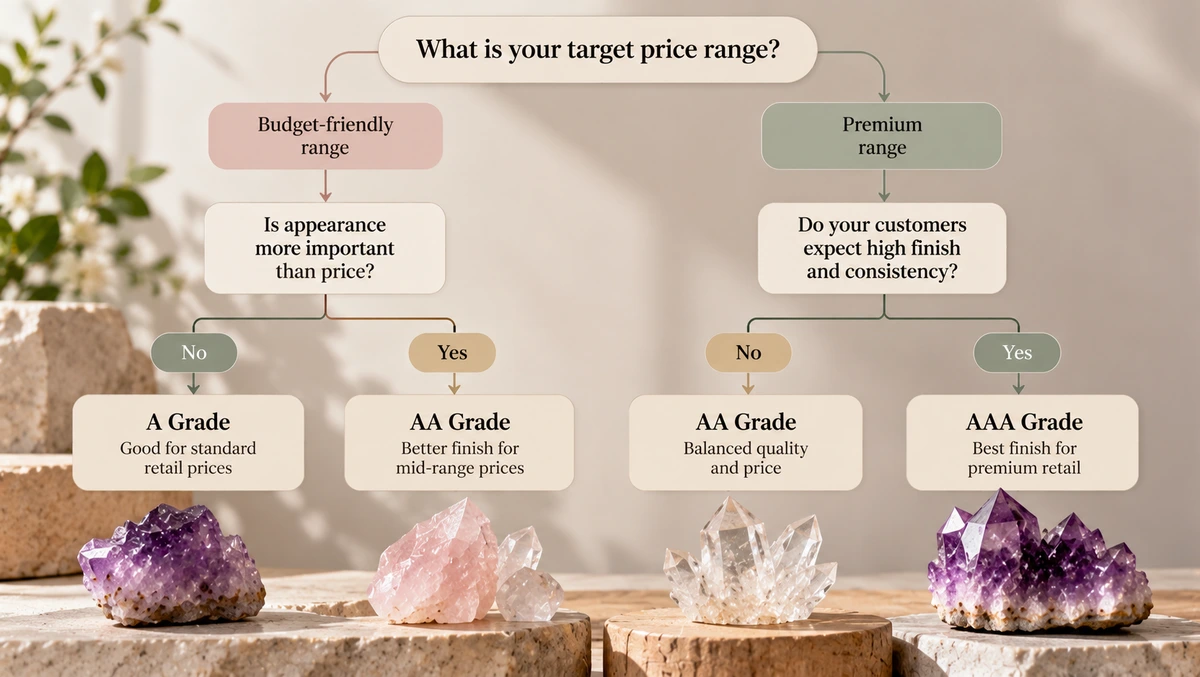
Here’s where the numbers come in.
Is a standard grade fine? It will if it is good enough in appearance for your customers – even if it costs a little less. If the majority of them are after the lowest possible price, then a more expensive grade probably won’t make much difference.
Would higher grades be better? Possibly – if it is a premium range, gifts or other items where finish and consistency is part of the attraction. Higher purchasers will be more likely to see differences in the finishing.
But don’t assume expensive stock automatically means better profit. A higher purchase cost can squeeze your margin if customers aren’t willing to pay more for it.
What to Check Before Placing a Bulk Order
A few practical checks can save you from an expensive surprise.
- Ask for samples. Not just one perfect-looking piece. Get several so you can see the variation within the grade.
- Look closely. Check the colour, finish, visible marks and shape. Photos help, but they don’t tell the whole story.
- Ask what the grade means. Get the supplier’s actual criteria. “AAA quality” on its own doesn’t explain much.
- Compare the extra cost. If AA costs more than A, work out whether the visible improvement is worth paying for.
- Check the whole batch. A lovely sample is useful, but it should represent the stock you’ll receive.
- Get the details in writing. Confirm the grade, size, quantity and acceptable variations before paying.
- Ask about problems upfront. Find out what happens if the delivered crystals don’t match the agreed specifications.
One more thing: calculate the cost of the pieces you can realistically sell at the intended price. If some items need to be discounted because of noticeable flaws, your actual margin could be lower than expected.
How to Check a Supplier’s Crystal Quality

Start with samples from the exact product and grade you’re considering. Look at them in consistent lighting, turn them around and check more than one piece. A crystal that looks flawless in a product photo may show marks or colour differences in person.
Then ask a few direct questions. Does the supplier inspect every piece individually, or are products sorted into broader quality groups? Is the sample representative of the bulk stock? What level of variation is considered acceptable? These details matter, especially when you’re ordering a large quantity.
It’s also worth checking how the supplier handles a batch that differs from the approved sample. Don’t leave this conversation until the delivery arrives.
East Ocean can be contacted to discuss product specifications and wholesale requirements before an order is placed. Share the type of crystal you’re looking for, the quantity you need and your target retail price. That gives the supplier a clearer idea of what may suit your range.
Buy Not Just the Grade Label
Crystal grading becomes easier to understand once you stop treating A, AA and AAA as universal guarantees. They aren’t. The supplier’s criteria, the actual product and the consistency of the bulk order all matter.
Compare samples. Ask several questions before committing to a large purchase. And work backwards from your retail price rather than automatically choosing the highest tier.
The aim is simple: find crystal quality grades that suit your customers, meet your product expectations and leave enough room for a sensible profit. Sometimes that will mean buying premium stock. Sometimes a lower grade will do the job just as well.